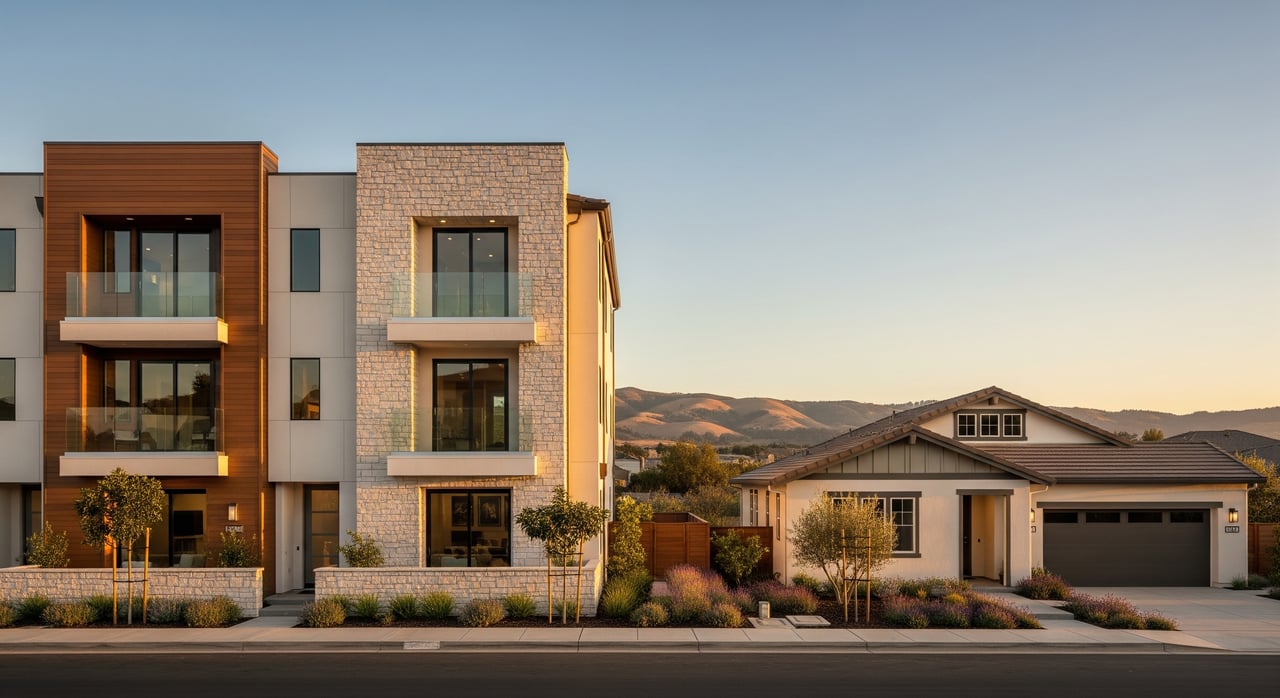
Trying to choose between a townhome and a single-family home in San Ramon? You are not alone. Between the walkable energy around City Center and the planned communities of Gale Ranch and Windemere, each option offers a different mix of cost, space, and convenience. In this guide, you will learn how total cost of ownership compares, what lifestyle tradeoffs to expect, how resale trends differ, and the key documents to review before you write an offer. Let’s dive in.
San Ramon snapshot
San Ramon sits in Contra Costa County within the larger Oakland–Hayward–Berkeley metro area. It is part of the Tri‑Valley, with major employment at Bishop Ranch and nearby commuting options. Many buyers focus on three areas: the City Center core for close-in amenities, Gale Ranch for a master-planned neighborhood feel, and Windemere for a mix of attached and single-family homes near parks and major roads.
Across these micro-neighborhoods, you will see both attached townhomes and detached single-family homes. The right fit depends on your budget, desire for space and privacy, maintenance preferences, and long-term plans.
Cost of ownership
Purchase price patterns
In most Bay Area markets, townhomes start at a lower entry price than comparable single-family homes nearby. In high-demand pockets close to City Center, the gap can narrow. Always compare recent sales for the same micro-neighborhood and layout to understand the true spread.
Taxes and Mello-Roos
California’s base property tax is roughly 1 percent of assessed value under Prop 13, plus additional voter-approved assessments and parcel taxes. In newer master-planned areas, Community Facilities Districts, often called Mello‑Roos, can add hundreds to several thousand dollars per year depending on the parcel and bond schedule. Review the county tax bill and preliminary title report for the exact line items for your property.
HOA dues and coverage
Townhome HOA dues vary widely based on amenities and what the association maintains. As a general Bay Area reference, basic communities can range roughly from the low hundreds per month, and amenity-rich communities can be higher. Single-family subdivisions, if they have an HOA at all, often fall at the lower end. Dues typically cover some combination of exterior building maintenance, roofing and siding for attached buildings, common-area landscaping, lighting, master insurance, trash, and reserve contributions. Review the HOA’s reserve study and financials to understand special assessment risk.
Insurance considerations
Single-family homes usually require a standard homeowners policy covering the structure. For townhomes, your coverage depends on the HOA’s master policy. Some policies cover the exterior only, while others require you to insure more of the structure with an HO‑6 policy. Earthquake and wildfire insurance are often recommended in the East Bay, and they are separate from standard coverage. Clarify what the master policy includes before you quote your personal coverage.
Maintenance, repairs, and utilities
A common planning rule is to budget 1 to 3 percent of a home’s value per year for maintenance and repairs, especially for older properties. Townhomes can shift some exterior costs into HOA dues, which reduces your direct out-of-pocket for items like roofing or exterior paint but does not eliminate long-term upkeep. Detached homes usually have larger yards and more systems to maintain, which can increase both time and expense.
Lifestyle tradeoffs
Privacy and noise
Single-family homes offer more space between neighbors and fewer shared walls, which tends to improve privacy and reduce noise transfer. Townhomes share at least one wall, and proximity can affect day-to-day quiet. End units or thoughtful construction can help.
Yard and personalization
If you value a larger private yard, space for pets, gardening, or future additions and ADUs, a single-family home provides more flexibility. Townhomes often include smaller patios or decks and may limit exterior changes through CC&Rs, making them easier to maintain but less customizable.
Commute and location
Townhome communities often sit closer to retail and employment. In San Ramon, that can mean quick access to City Center and Bishop Ranch, plus nearby transit options. Single-family streets can feel quieter and more residential, sometimes set slightly farther from commercial hubs.
Parking and storage
Single-family homes usually include a private driveway, garage, and additional storage potential. Some townhomes limit garage size and guest parking, which can influence daily convenience and where visitors park. Always confirm parking allocations and guest policies in the HOA documents.
Amenities and community rules
Townhome HOAs may provide pools, clubhouses, playgrounds, and well-kept common areas that support an easy, social lifestyle. The tradeoff is compliance with rules that can limit rentals, short-term stays, exterior changes, and certain uses. Single-family neighborhoods may have fewer amenities and fewer restrictions, depending on whether an HOA is present.
Resale and liquidity
Buyer pools
Single-family homes tend to draw the broadest buyer audience, which supports long-term marketability. Townhomes appeal strongly to first-time buyers, commuters, and downsizers who value lower maintenance and location convenience.
Appreciation and volatility
Historically, detached homes often capture more absolute appreciation due to land value and wide demand. In constrained areas close to amenities, well-located townhomes can still appreciate well. Financing rules, HOA health, and community perception can influence the attached market.
Liquidity patterns
In strong seller conditions, both product types can sell quickly. In balanced or slower markets, single-family homes frequently hold pricing and move faster than attached homes. In newer townhome communities with similar floor plans, there can be more direct competition among listings.
San Ramon factors that matter
- School district assignments can influence buyer demand and long-term value. Verify current boundaries with the district.
- Proximity to Bishop Ranch and City Center tends to support demand among local workers.
- Mello‑Roos taxes and higher HOA dues can raise monthly carrying costs and affect affordability.
- Natural hazard exposure, including wildfire and flood zones, can affect insurance costs and buyer pools. Review hazard disclosures and maps during due diligence.
- ADU potential on single-family lots can add flexibility for multi-generational living or future income, subject to local rules.
Financing differences
Lenders treat some townhomes like single-family homes if they are fee simple, while others are classified as condominiums. Condo-classified projects can require additional lender review, including owner-occupancy ratios and HOA financial health. Confirm whether the home is fee simple or a condo in public records and disclosures, since this can affect loan programs and down payment options.
Due diligence checklist
Before you commit, gather the right documents and run a clear cost model.
- HOA packet: CC&Rs, bylaws, budget, reserve study, recent financials, insurance declarations, meeting minutes, and any pending special assessments or litigation.
- County tax bill and preliminary title report to confirm base tax rate, local assessments, and any Mello‑Roos or CFD amounts for the parcel.
- Seller disclosures and natural hazard statements, plus the property’s insurance and claims history if available.
- MLS history and recent neighborhood comps for days on market and pricing trends.
- Insurance structure: master policy type for townhomes and required HO‑6 coverage.
- Utilities: what is individually metered vs included in HOA dues.
- Parking: assigned spaces, garage size, and guest parking rules.
- Rental policies: any rental caps, minimum lease terms, or short-term rental restrictions.
- School boundaries: verify current assignments directly with the district.
Cost model components to estimate:
- Mortgage payment based on current rates and your loan program
- Annual property tax estimate including base tax and local levies
- Monthly HOA dues and what they cover
- Homeowners or HO‑6 insurance, plus optional earthquake and wildfire coverage
- Annual maintenance budget within the 1 to 3 percent guideline
- Utilities, landscaping, and water costs
- Reserve for one-time items like roof or HVAC replacement based on age and condition
Which is right for you
Choose a townhome if you prioritize location near City Center or Bishop Ranch, lower hands-on maintenance, and access to shared amenities. This path can help you control entry costs while staying close to daily conveniences.
Choose a single-family home if you want more privacy, yard space, and long-term flexibility for improvements or an ADU. You will likely accept more maintenance responsibility in exchange for space and potential resale strength.
If you are torn, compare two or three homes side by side in the same micro-neighborhood. Price out the full monthly carrying cost, factor in HOA reserves and any Mello‑Roos, and weigh lifestyle fit for the next five to seven years.
Ready to talk specifics for City Center, Gale Ranch, or Windemere? Reach out to Conor Dunn for a local, step-by-step plan tailored to your goals.
FAQs
Are HOA dues for San Ramon townhomes worth it?
- It depends on your priorities. Dues shift exterior upkeep and amenity costs to the HOA, which adds convenience, but they increase monthly expenses and can change over time.
How do Mello‑Roos taxes in Gale Ranch or Windemere affect affordability?
- Mello‑Roos adds a separate line item to your tax bill, which increases your monthly carrying cost. Ask for the precise amount on the parcel and whether it declines based on the bond schedule.
Are San Ramon townhomes harder to finance than single-family homes?
- Some are. If a townhome is classified as a condominium or the HOA’s finances are weak, certain loan programs may be limited. Verify the property’s classification and any condo project approvals with your lender.
Will a San Ramon townhome appreciate less than a single-family home?
- Not always. Detached homes often benefit from land value, but well-located townhomes near City Center or employment hubs can perform strongly. Compare recent neighborhood comps.
What insurance do I need for a San Ramon townhome?
- Start with the HOA’s master policy to see what is covered. You may need an HO‑6 policy for interior coverage, plus consider separate earthquake and wildfire policies based on risk.
What should I review before making an offer in an HOA community?
- Review the HOA packet, reserve study, budget, meeting minutes, insurance declarations, rental rules, parking policies, and any planned special assessments, then build a full cost model.