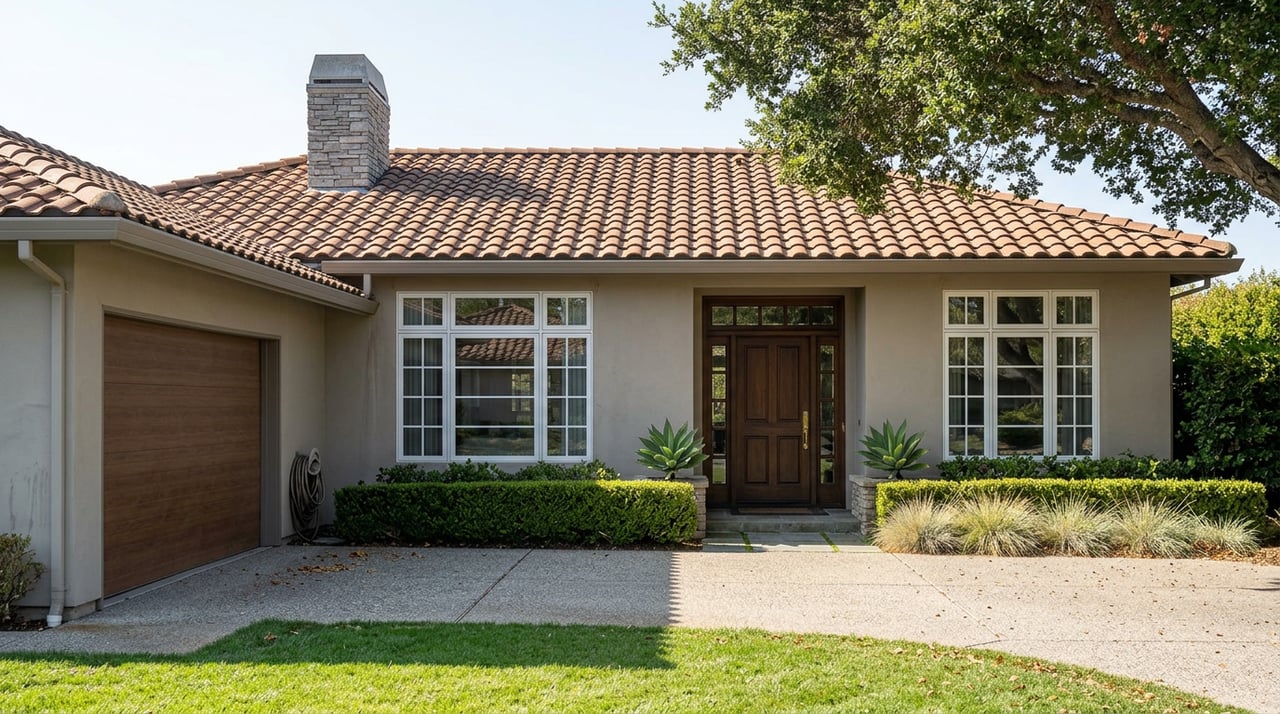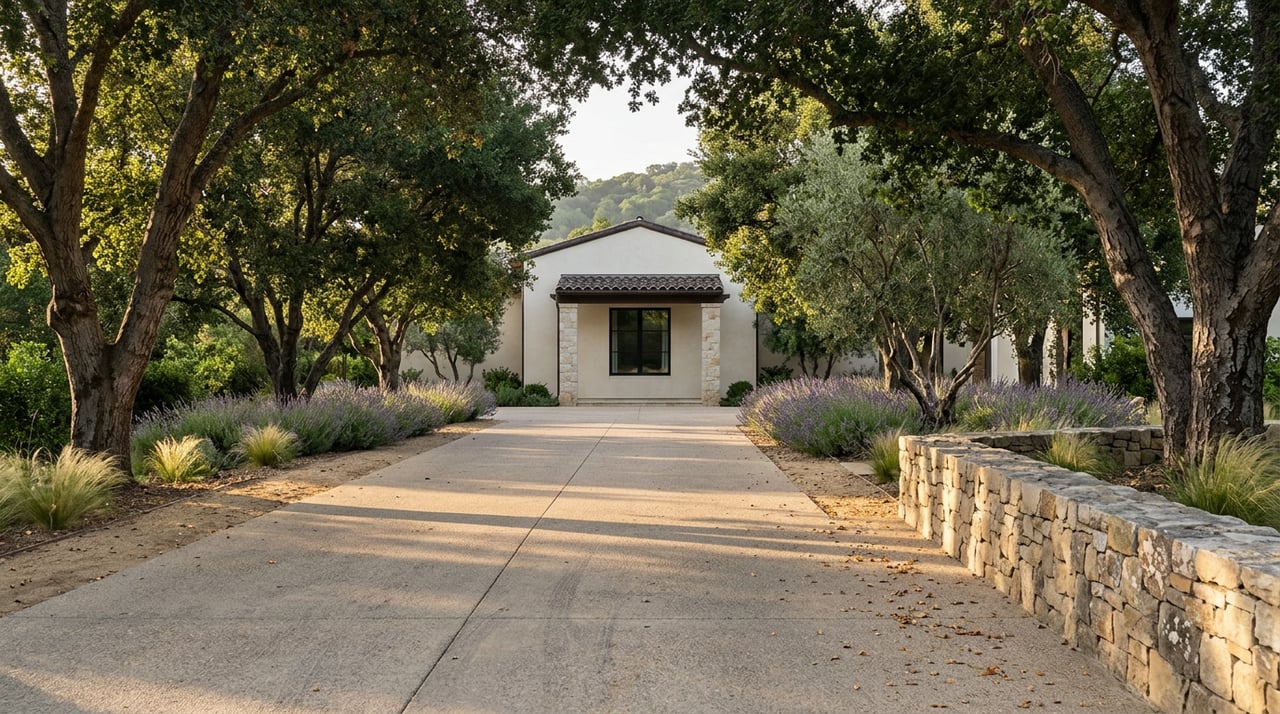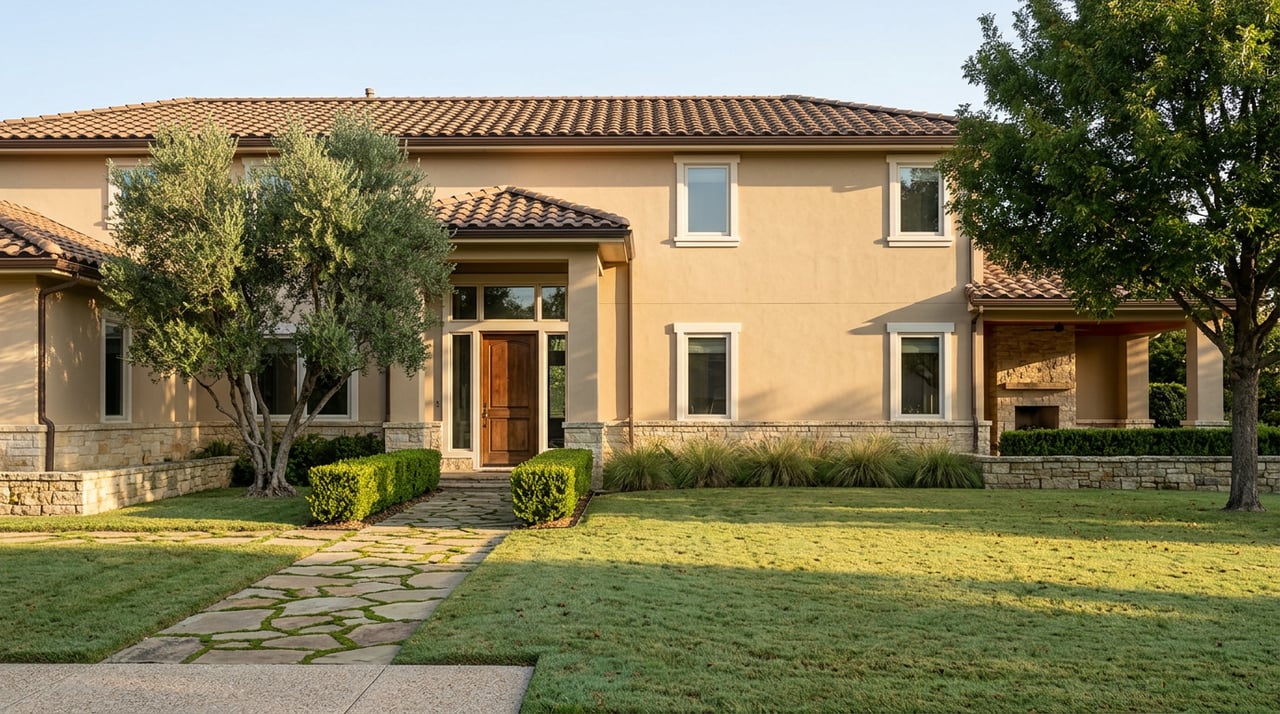
Two buyers tour Alamo this month with the same figure in their head. One national portal put the town's median asking price at $876 a square foot in September 2026, so that's the number both of them are budgeting around. The first tours a two-bedroom in Alamo Villages, a short walk from Danville Boulevard, priced right in that neighborhood. The second tours a rebuilt four-bedroom in Rudgear Estates, on a flat half-acre with room for a pool, and the listing agent is quoting something closer to $1,400 a square foot. Same town. Same month. Same median everyone quoted to them before they ever booked a showing.
Neither buyer stumbled into a bad deal or a great one. They walked into two different housing products that happen to share a zip code, and the gap between them isn't market noise. It's zoning, and it was built on purpose.
A median built to describe one thing, asked to describe three
Alamo is unincorporated, which means Contra Costa County, not a city hall, sets the rules for what can be built where. A median works cleanly when it's summarizing one kind of home. Alamo's median has to summarize three: condo-titled attached homes clustered near Danville Boulevard, standard single-family lots that make up most of the town, and agricultural-zoned acreage that permits things a half-acre lot never will. All three sit within a few miles of each other, and all three get folded into the same headline number every time a portal publishes a market snapshot.
That's why a single figure like September 2026's $876-a-square-foot median tells you almost nothing about what a specific search will actually cost. It's an average of three tiers that don't compete with each other for the same buyer.
Three tiers, one town
You can see the product split just by naming the communities. Alamo Villages and Wild Oaks Village are condo-titled, attached communities built for low-maintenance living. Rudgear Estates, Round Hill Country Club, Jones Ranch, Ball Estates, and Stonegate are standard single-family lots, typically 12,000 square feet to about an acre, governed by the county's R-20 through R-100 districts, which set minimum lot sizes from 20,000 to 100,000 square feet per dwelling unit. Further out, agricultural-zoned parcels under the county's A-2 designation start at a five-acre minimum and allow uses, like stables or a riding academy with a land use permit, that no half-acre lot in town can offer at any price.
Redfin's own neighborhood-level data backs up how far apart these tiers trade. Over the three months ending in August 2026, Downtown Alamo's home stock sold for a median of $668 a square foot, while Westside Alamo's sold for roughly $1,460 a square foot in the same window. That's not a rounding difference. It's two different products, a shared-wall home with no separate land value on one end and a detached house on its own dirt on the other, and the zoning code is the reason they will never trade at the same rate no matter how the broader market moves.
Why the Danville Boulevard corridor prices differently, and will keep doing so
Alamo's current general plan permits single-family use only, at one to three dwelling units per acre, along both Danville Boulevard and Stone Valley Road. That's the baseline that has shaped the corridor for decades. But the county's in-progress General Plan update, tracked publicly by the resident group Alamo Vision 2040, proposes designating parcels along Danville Boulevard for up to 30 dwelling units per acre, with Alamo's small downtown core eligible for as much as 75 units per acre under the draft plan.
Whether or not those exact numbers survive the approval process, the direction is already set. The corridor is the one part of Alamo the county has explicitly earmarked for more attached, higher-density housing, not less. That's a structural reason this pocket's per-square-foot price has room to stay lower than the rest of town, not a temporary dip a buyer should expect to close.
The lot that comes with a bonus room to rent
Square footage isn't the only thing separating the standard single-family tier from the attached tier. Contra Costa County rewrote its accessory dwelling unit ordinance in 2025, and under the current rules, a detached ADU on a lot of 12,000 square feet or more, which describes nearly every conventionally zoned parcel in Alamo's R-20 and R-40 districts, can run up to 1,200 square feet, with an attached garage of 600 to 800 square feet that doesn't count against that limit.
A buyer paying $1,460 a square foot in Rudgear Estates or Jones Ranch isn't just buying a bigger house. They're buying a parcel that can legally add a second, income-producing structure. A buyer at $668 a square foot in a condo-titled community is buying a home on a shared parcel with no separate land to build on, so that option generally isn't available at any price point within that tier. Comparing the two purely on cost per square foot misses the part of the value that isn't inside the house at all.
The tier the median can't smooth out
The third tier is the one that does the most damage to any headline number. Alamo's A-2 General Agricultural zoning sets a minimum lot size of five acres, and allows uses like stables or a riding academy with a land use permit, uses that acreage alone doesn't guarantee on a smaller or differently zoned parcel. Public listings in Alamo have ranged from well under an acre to parcels over 37 acres, and when one large agricultural-zoned estate closes in a given month, there's rarely a second comparable sale in the same window to offset it.
That's a different problem than simple thin-market noise. It's a zoning-created outlier, and it means the same townwide median can look wildly different from one month to the next depending entirely on whether one estate-sized parcel happened to close, not on whether ordinary Alamo homes got more or less expensive.
If you're cross-shopping Alamo against Danville or San Ramon
A single median is a weak tool for comparing towns when one of those towns is internally split the way Alamo is. Before treating any published number as a stand-in for what your search will cost, it helps to answer three questions:
- Which tier is that median actually built from this month, attached, standard-lot, or agricultural?
- Is the property condo-titled, or does it sit on its own parcel with ADU and rebuild potential?
- What's the zoning designation on the lot, not just the acreage, since a five-acre parcel zoned R-100 doesn't carry the same rights as five acres zoned A-2?
Answering those before you start comparing towns tells you far more than stacking Alamo's median against Danville's or San Ramon's ever will.
A few questions we hear often
Can I add an ADU to a home in Alamo Villages or Wild Oaks Village? Generally no. Those are condo-titled communities without a separate parcel to build on, and the county's ADU allowances apply to standard single-family lots, not shared or attached ownership structures.
Does a large lot in Alamo automatically mean I can keep horses? Not on its own. Horse-related uses typically require A-2 General Agricultural zoning with a minimum of five acres and a land use permit, so acreage alone doesn't settle the question without checking the actual zoning designation.
Why does Alamo's median price look so different from one report to the next? Different trackers measure different months and often blend different home types together, and Alamo's low monthly sales count means a single closing in an underrepresented tier, attached, standard, or agricultural, can move the number well beyond what typical buyers actually paid.
If you're weighing Alamo against another Tri-Valley town, or trying to figure out which of these three tiers actually fits your search, that's exactly the kind of question Conor Dunn and The Dunn Team spend their days answering. Reach out for a free home valuation and a clear read on what your budget actually buys, tier by tier, before you make an offer based on a number that was never describing one market to begin with.