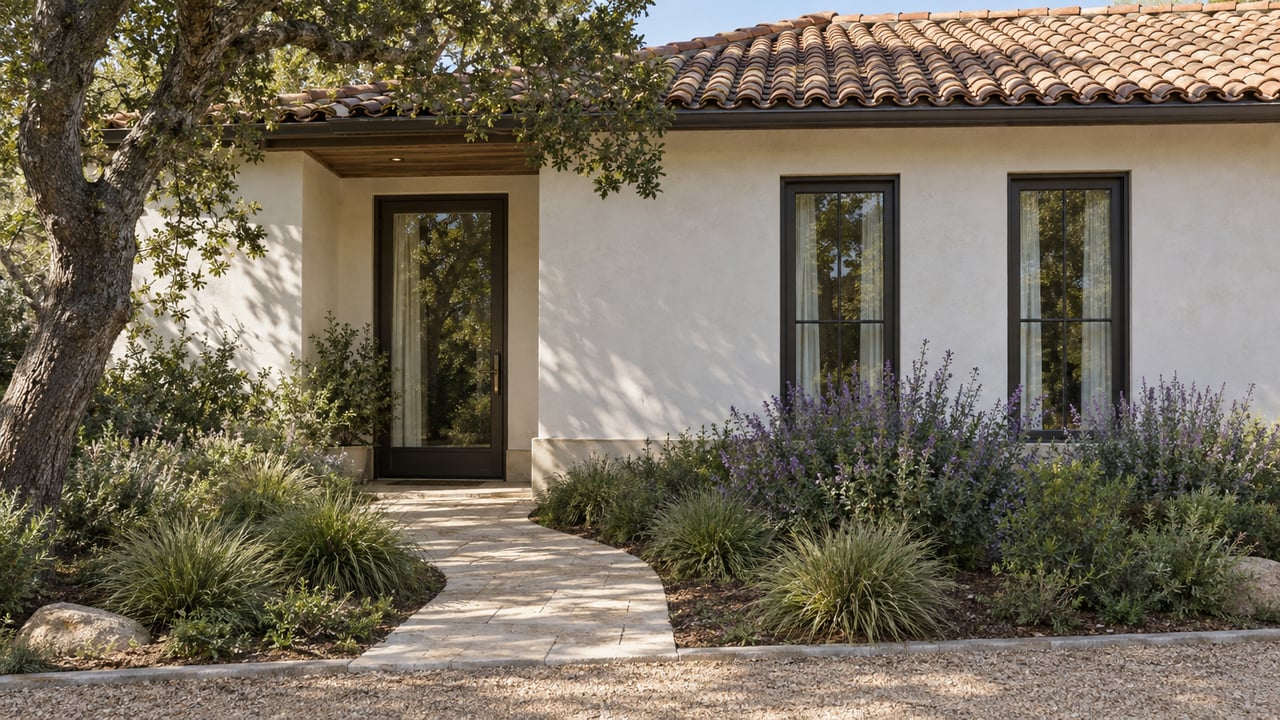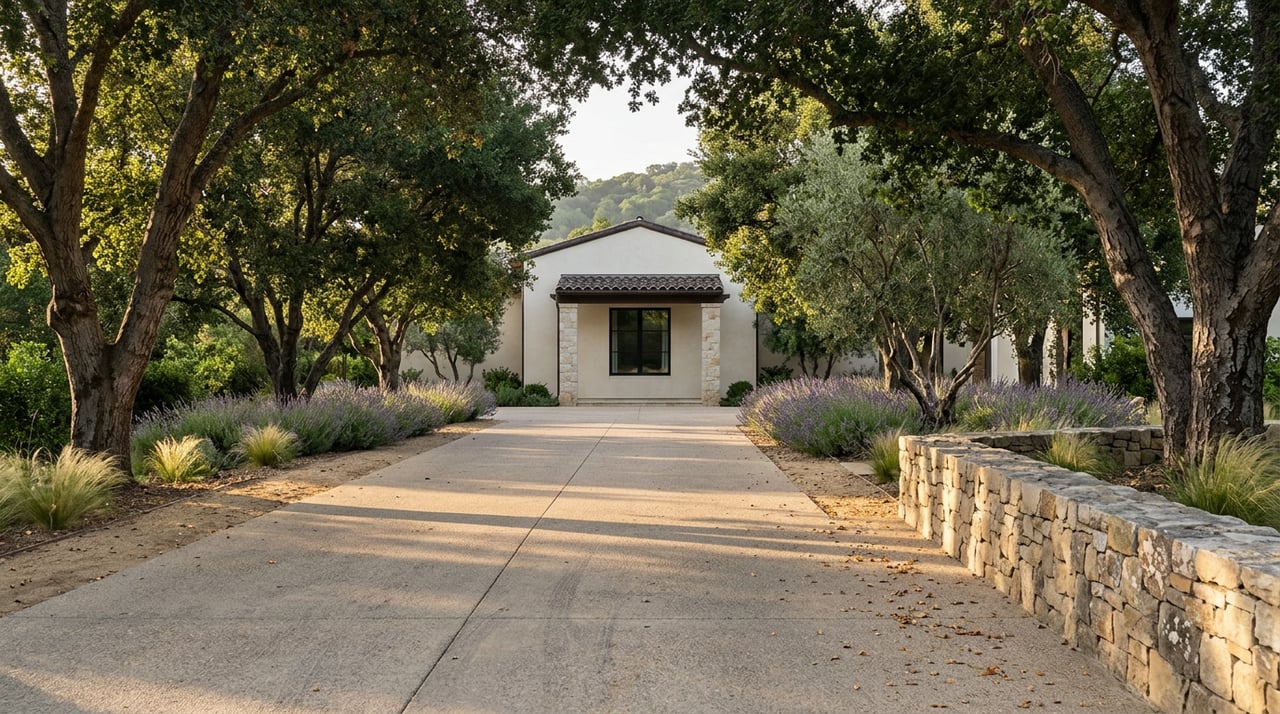
You've toured the estate behind the gate on Lark Lane, walked the gravel apron past the oaks, and pictured yourself pulling into that private drive every evening. The listing called it privacy. Your lender will call it something else: a document that may not exist.
This is the friction almost nobody flags before an Alamo offer goes in. Not the price. Not the multiple-offer scramble. The road itself, and whether anyone ever bothered to write down who pays to fix it.
The statute everyone assumes covers it
California does have a law for this. Civil Code Section 845 says that when a private road benefits several parcels, the cost of maintaining it gets split according to how much use each owner makes of it, and it gives paying owners a way to seek contribution from neighbors who don't pitch in. A Sacramento real estate law firm's rundown of the statute puts it plainly: the code offers a basic path to recover costs, but it stops well short of a real framework for running the road day to day.
What it doesn't do is spell out who decides when the road needs repaving, what happens when one owner wants gravel and another wants asphalt, or how a dispute gets resolved without a lawsuit. It also doesn't automatically bind future buyers the way a recorded covenant does. Section 845 is the floor, not the plan. In a neighborhood built almost entirely on private lanes and shared driveways, that gap matters more than it would almost anywhere else in the Tri-Valley.
Why this shows up so often in Alamo specifically
Alamo isn't an incorporated city. It's unincorporated Contra Costa County, which is part of why the streets have no sidewalks or streetlights and the lots run to acres instead of the quarter-acre norm you'd find a few miles south. That same low-density, custom-estate character is exactly what produces private roads at a rate you don't see in a subdivision with county-maintained curbs.
Look at how the enclaves are described even in the marketing language agents use to sell them: Westside Alamo, the Stone Valley corridor, Roundhill Country Club, Alamo Oaks. These are consistently framed around gated entrances, shared drives, and "private road maintenance covenants," because the private road isn't an exception in Alamo's estate market, it's closer to the default. A 37-acre Westside parcel currently marketed with access "on Lark Lane behind the main gates" sits close to the Stone Valley entrance to I-680, which is a fairly ordinary description for this part of town. The privacy is the product. The paperwork behind it is the part nobody photographs.
That's the piece of the story that doesn't show up in the listing photos or the walkthrough: the same feature that makes an Alamo estate feel secluded is the feature most likely to complicate your loan.
The document that only surfaces during underwriting
Here's where it gets specific enough to actually change your closing timeline. Not every loan program treats a private road the same way. JustAnswer describes cases in which conventional loans underwritten to Fannie Mae guidelines have required a recorded private road maintenance agreement before closing, while FHA and Freddie Mac loans in the same transaction did not carry that requirement, since a recorded easement was treated as sufficient instead.
That distinction rarely comes up during the excitement of writing an offer. It comes up three weeks later, when the underwriter is working through the file and asks the title company for a recorded maintenance agreement that was never created because the four families on that lane have shared the grading bill informally for a decade and never had a reason to write it down. At that point you're not negotiating price. You're negotiating time, and time is the one thing a competitive Alamo transaction rarely has to spare.
If you're a buyer working with a conventional loan and eyeing anything on a private lane or shared driveway, the smart move is to ask your lender and agent, before you write the offer, whether that specific loan program requires a recorded agreement. If you're paying cash, this becomes a due-diligence question instead of a financing one, but it's still worth answering, since an unrecorded arrangement can complicate your own resale down the line.
What a real agreement actually needs to cover
A recorded private road maintenance agreement isn't a formality. The pieces that matter most:
- A clear cost-sharing formula, ideally tied to actual use rather than a flat per-household split
- A defined process for deciding when repairs happen and who has authority to approve them
- A mechanism for collecting from an owner who doesn't pay, so the burden doesn't fall on whoever cares most
- Language addressing future owners of each parcel
None of this is complicated to draft. It's just easy to skip when everyone on the lane gets along and nobody's refinanced in years.
What this means if you're selling
If your Alamo home sits on a private road or shared drive and there's no recorded agreement, the time to find that out is before you list, not after you're in contract with a conventional buyer whose lender just asked for one. Pulling together signatures from three or four neighboring owners takes weeks under the best circumstances. Trying to do it inside a thirty-day escrow, with a motivated buyer watching the calendar, is a different exercise entirely.
The stakes are real given where this market sits. Recent data puts the average Alamo home value at roughly $2.48 million as of late summer 2026, down modestly from a year earlier, which tells you the buyer pool at this price point is sophisticated and their lenders are thorough. A seller who can hand over a recorded agreement on day one of escrow is offering buyers certainty about a document that might otherwise come up later in the process.
A few questions we hear often
Does every private road in Alamo have a maintenance agreement already? No. Many long-held properties rely on informal cost-sharing between neighbors, which works fine until someone sells, refinances, or a repair bill gets contentious.
If there's no agreement, does that kill a sale? Not necessarily, but it can slow one down considerably if the buyer's loan program requires a recorded agreement and the neighbors need time to sign off. Cash buyers and buyers using loan types that accept a recorded easement instead face less friction.
Who typically pays for putting one together? Sometimes the cost gets split as part of a broader road repaving project rather than drafted in isolation. An attorney familiar with California easement law is worth the fee here.
The takeaway for your search or your sale
The private lane behind the gate is real charm and it's part of why Alamo estates command what they do. It's also, structurally, a financing variable that depends on which loan a buyer picks and whether four neighbors ever put something in writing. If you're circling a property on Stone Valley, Roundhill, or any of the Westside lanes, ask about the recorded agreement before you fall for the gate. If you're getting ready to sell one, get that document in order before a buyer's underwriter asks for it.
The Dunn Team works these Alamo estate transactions often enough to know exactly where this question needs to get asked, and how early. If you're weighing a move onto one of Alamo's private lanes, or wondering what your current property is worth with that detail already sorted out, request a free home valuation and we'll walk you through it before it becomes a surprise in someone else's underwriting file.
This article is general information, not legal, tax or financial advice. Consult a qualified professional about your situation.